Features
Our ANPR products support multiple core features required to implement advanced solutions.
Feature |
Availability |
|---|---|
The next video shows LPR, LPCI, VCR and VMMR running on Windows:
Image Enhancement for Night-Vision (IENV)
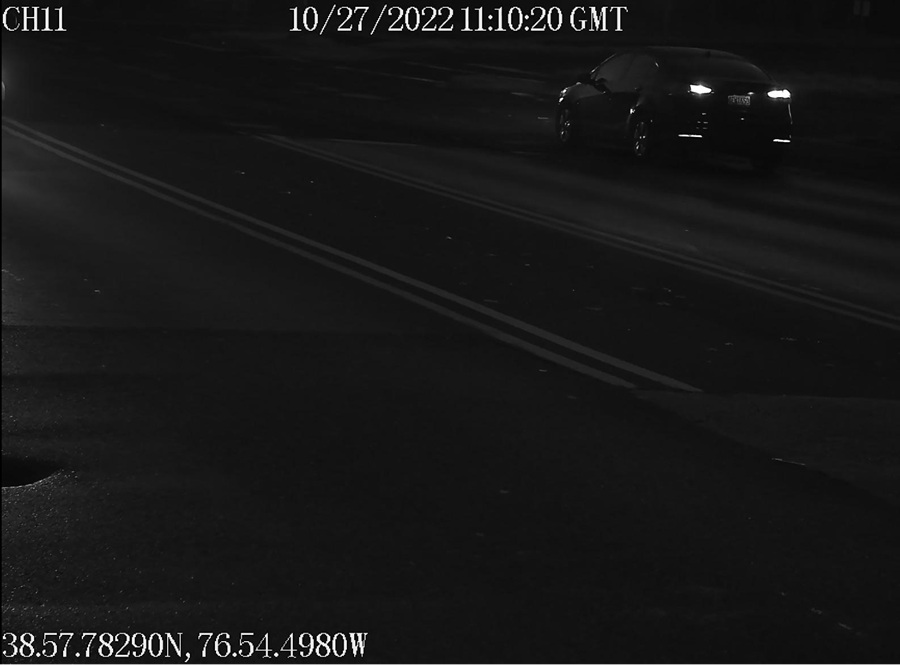
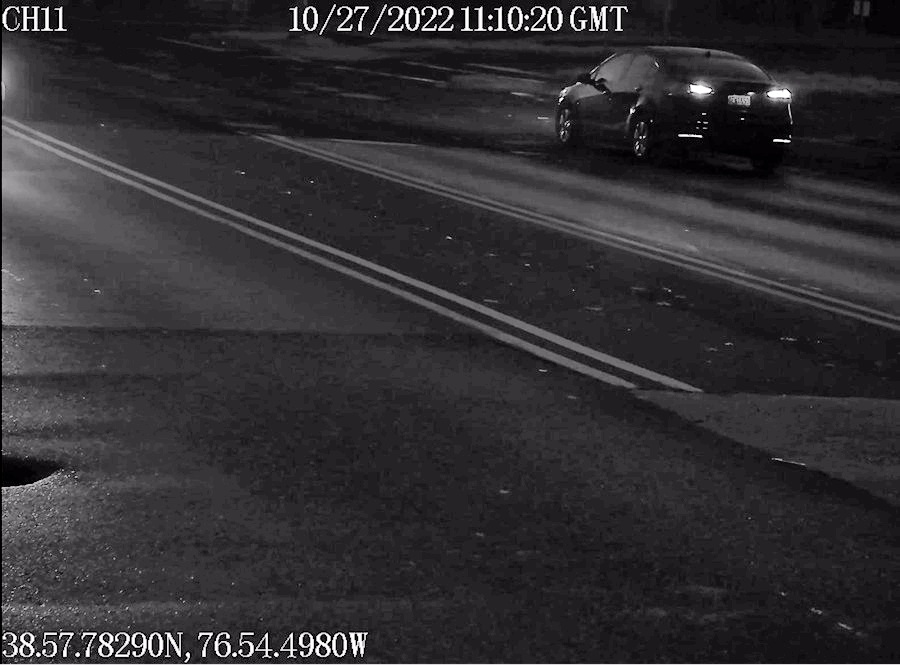
This is an amazing feature used to improve the quality of low contrast images from a video stream captured at night. When enabled IENV improves the overall accuracy for all other features (Car/plate detection, License Plate Recognition (LPR), License Plate Country Identification (LPCI), Vehicle Make Model Recognition (VMMR), Vehicle Color Recognition (VCR), Vehicle Body Style Recognition (VBSR), Vehicle Direction Tracking (VDT), Vehicle Speed Estimation (VSE)…).
IENV is CPU intensive but we made it fully SIMD accelerated (SSE, AVX, NEON) and massively multithreaded to reduce the latency. Using 720p images (1280x720) you can expect up to 2 milliseconds latency (500fps throughput) on Intel i7-4790K (x86-64). This feature is also optimized on ARM CPUs (thanks to NEON) but we only recommend it on high-end device.
Starting v4.0.0 the implementation is a combination of AI models and hand-crafted robust algorithms which improves the accuracy.
Next image is public and from Reddit, we show how IENV transforms an it:
Original from Reddit |
Transformed using IENV |
|---|---|
|
|
Anti-Overexposure
IENV contains an anti-overexposure module (always enabled) which means it can be enabled day and night regardless the luminosity.
Debugging
IENV is a filter applied on the images before any other function. You can dump the output of the filter to a local file as explained in the debugging section.
License Plate Recognition (LPR)
This is the main feature for an ANPR product and referred to as “the recognizer” in the rest of the document. This module recognize each character in the license plate using state-of-the-art Optical Character Recognition (OCR). We also return the confidence/score for each character.
Input |
Output (OCR) |
|---|---|

|
706YCQ |

|
MXC808E |

|
P001AM77 |

|
D8878 |

|
서울31바5533 |
Supported countries
Unlike other companies we don’t segment our implementation by region but are grouping them by charset (e.g. Latin, Korean, Arabic, Chinese…). The reference models provided on Github are trained on Latin charset ([A-Z0-9]) using license plates from more than 150 countries. The dataset predominantly contains European license plates as this is where our company is based and most of our customers are using this SDK in Europe. The implementation will work with any country using Latin charset like USA, Canada, Russia, Armenia, Monaco, India, UK, Turkey, Argentina, Mexico, Indonesia, Philippines, New Zealand, Australia, Brazil, South Africa, Mauritania, Senegal… If you have any accuracy issues with your country please let us know and we’ll add more samples in the dataset. If you can provide your own dataset it would be great.
Alphabet enforcement
The charset configuration entry defines an alphabet and an enforcement. The format is alphabet[enforcement]. The enforcement is optional.
The alphabet could be "latin", "korean", "chinese", ... and the enforcement is an ISO-3 country code (in lower case). Example: "latin[bra]" means "latin" alphabet and "bra" (Brazil) enforcement.
Multiple enforcement are supported (e.g. "bra" for Brazil, "gbr" for Great Britain, "isr" for Israel, "twn" for Taiwan, "kza" for Kazakhstan, …).
Let’s take "bra" as an example and explain how the enforcement mechanism works:
The charset configuration entry would be equal to
"latin[bra]"Brazil has 2 license plate patterns:
AAANANNandAAANNNN.Astands for Alpha (A-Z) andNstands for Numeric (0-9).The OCR module is a classifier and the
"latin"alphabet has 36 classes ([0-9A-Z]). The classifier will return a score ([0-1]) for each class.The enforcer will use the classification scores to match the expected pattern. The matching isn’t a brute force process but is done smartly. Example:
0will be promoted asOonly if the alternative score is high enough and doing so improves the edit distance. Also, the0could be a misclassification forQinstead ofO. The doubt is lifted by using the class with the highest score.
License Plate Country Identification (LPCI)
License Plate Recognition (LPR) module returns the content of the plate using Optical Character Recognition (OCR) but doesn’t return the country and state of the plate. License Plate Country Identification (LPCI) is used to identify the country of issue. This module uses both classification and OCR to identify the country and state.
Input |
Output (Country) |
Output (State) |
Techniques |
|---|---|---|---|

|
USA |
Tennessee |
Classification |

|
Canada |
Alberta |
Classification |

|
United Arab Emirates |
Dubai |
Classification |

|
Germany |
– |
Classification |

|
Republic of Korea |
– |
Classification |

|
Russian Federation |
Moscow |
Classification + OCR |

|
Kazakhstan |
Mangystau Province |
Classification + OCR |

|
United Kingdom |
North |
Classification + OCR |
Identifiable countries
Danger
This is not the list of supported (OCR) countries. Check here for the list of supported countries.
- #149 countries or states are identifiable:
ALB-Albania
AND-Andorra
ARE-United_Arab_Emirates + 7 emirates (Abu_Dhabi, Ajman, Dubai, Fujairah, Ras_al_Khaimah, Sharjah, Umm_al_Qaiwain)
ARM-Armenia
AUS-Australia
AUT-Austria
AZE-Azerbaijan
BEL-Belgium
BGR-Bulgaria
BHR-Bahrain
BIH-Bosnia_and_Herzegovina
BLR-Belarus
BOL-Bolivia
BRA-Brazil
CAN-Canada + 10 provinces (Alberta, British_Columbia, Manitoba, New_Brunswick, Newfoundland_and_Labrador, Nova_Scotia, Ontario, Prince_Edward_Island, Quebec, Saskatchewan)
CHE-Switzerland
CHL-Chile
CHN-China
COL-Colombia
CYP-Cyprus
CZE-Czechia
DEU-Germany
DNK-Denmark
ECU-Ecuador
ESP-Spain
EST-Estonia
FIN-Finland
FRA-France
GBR-United_Kingdom_of_Great_Britain_and_Northern_Ireland
GEO-Georgia
GRC-Greece
HRV-Croatia
HUN-Hungary
IDN-Indonesia
IND-India
IRL-Ireland
ISL-Iceland
ISR-Israel
ITA-Italy
KAZ-Kazakhstan
KGZ-Kyrgyzstan
KHM-Cambodia
KOR-Republic_of_Korea
KWT-Kuwait
LIE-Liechtenstein
LKA-Sri_Lanka
LTU-Lithuania
LUX-Luxembourg
LVA-Latvia
MCO-Monaco
MDA-Republic_of_Moldova
MEX-Mexico
MKD-North_Macedonia
MLT-Malta
MNE-Montenegro
MYS-Malaysia
NLD-Netherlands
NOR-Norway
NZL-New_Zealand
PER-Peru
POL-Poland
PRT-Portugal
PRY-Paraguay
QAT-Qatar
ROU-Romania
RUS-Russian_Federation
SAU-Saudi_Arabia
SMR-San_Marino
SRB-Serbia
SUR-Suriname
SVK-Slovakia
SVN-Slovenia
SWE-Sweden
TJK-Tajikistan
TKM-Turkmenistan
TUR-Turkey
TWN-Taiwan
UKR-Ukraine
URY-Uruguay
USA-United_States_of_America + 51 states (Alabama, Alaska, Arizona, Arkansas, California, Colorado, Connecticut, Delaware, Florida, Georgia, Hawaii, Idaho, Illinois, Indiana, Iowa, Kansas, Kentucky, Louisiana, Maine, Maryland, Massachusetts, Michigan, Minnesota, Mississippi, Missouri, Montana, Nebraska, Nevada, New_Hampshire, New_Jersey, New_Mexico, New_York, North_Carolina, North_Dakota, Ohio, Oklahoma, Oregon, Pennsylvania, Rhode_Island, South_Carolina, South_Dakota, Tennessee, Texas, Utah, Vermont, Virginia, Washington, Washington_DC, West_Virginia, Wisconsin, Wyoming)
UZB-Uzbekistan
VEN-Venezuela
VNM-Viet_Nam
Vehicle Color Recognition (VCR)
Vehicle Color Recognition (VCR) function retrieves the color information (top-5 results) using classification.
Input |
Output (Color) |
|---|---|

|
brown |

|
white |

|
silver |
Supported colors
- The 12 most popular colors are supported:
black
blue
brown
gold
gray
green
orange
purple
red
silver
tan
white
yellow
The information about the popularity is based on https://www.carmax.com/articles/car-color-popularity.
Vehicle Make Model Recognition (VMMR)
Vehicle Make Model Recognition (VMMR) function retrieves the car make, model and year information (top-5 results). We also support Vehicle Color Recognition (VCR) and Vehicle Body Style Recognition (VBSR) as explained above.
Input |
Output (Make) |
Output (Model) |
Output (Year) |
|---|---|---|---|

|
audi |
rs6 |
2015 |

|
bmw |
x6 |
2015 |

|
mercedes benz |
gle |
2019 |
Supported Makes
We support more than 300 makes (Toyota, Mercedes-Benz, BMW, Audi, Renault…).
Note
The list was updated on April 2026.
Supported Models and Years
We support more than 20,000 models (Yaris, GLE, X6, RS6, Clio…).
Note
The list was updated on April 2026.
Vehicle Body Style Recognition (VBSR)
The VBSR function uses classification and returns the top-5 results. This function is independent of Vehicle Make Model Recognition (VMMR).
Input |
Output (VBSR) |
|---|---|

|
bus |

|
convertible |

|
heavytruck |

|
mpv |

|
pickup |

|
sedan |

|
van |
- VBSR could be used to detect rules violations:
Bus lanes restrictions
HGVs (heavy goods vehicles) or trucks restrictions
…
Supported body styles
- The 12 most popular body styles are supported:
bus
campervan
convertible
coupe
hatchback
heavytruck
motorcycle
mpv
pickup
sedan
suv
van
Vehicle Direction Tracking (VDT)
This feature is only available on UltimateITS and used to track a vehicle using a unique identifier. Tracking a vehicle is a key functionality in order to implement bus lane enforcement, red light enforcement, speed detection, congestion detection, double white line crossing detection, incident detection… functions.
Vehicle Speed Estimation (VSE)
This feature is only available on UltimateITS and used to estimate the vehicle speed. No camera calibration is required.
